
Home / Smart WiFi Bulbs
Bulb programme
Smart WiFi bulbs
The smart offer in this catalogue is deliberately narrow: one documented model, specced properly, instead of a wall of near-identical smart bulbs. The Tuya Wi-Fi RGB + CCT smart bulb is a 9 W A60-format bulb that adds app control, full colour and tunable white to the standard programme — the upgrade line for retail programmes that already carry the A60 range.
Tuya Wi-Fi RGB + CCT smart bulb
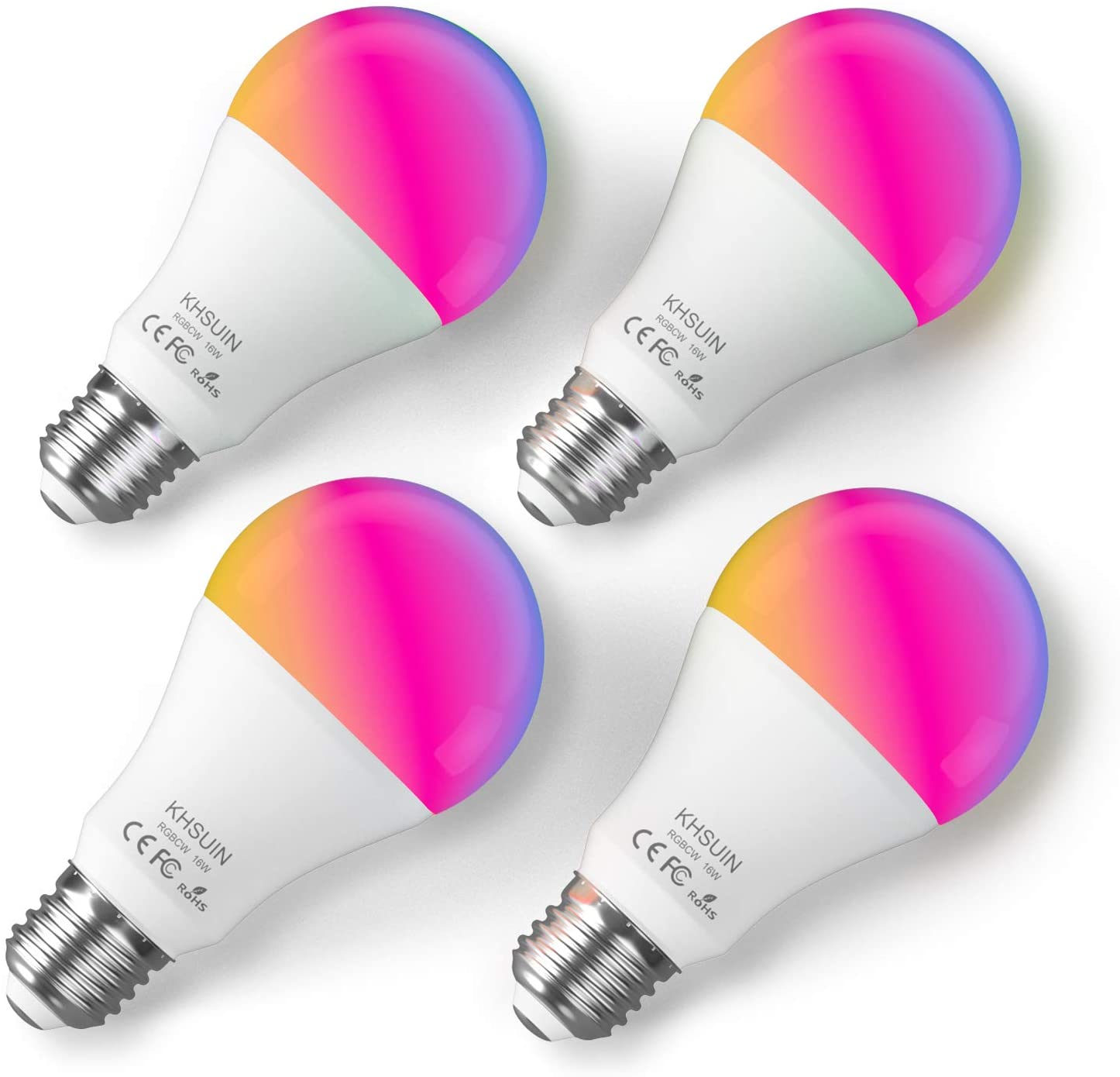
The record specifies RGBW colour plus CCT tunable white, Wi-Fi and remote-control switching, and full dimming. Output is 810 lm at 90–100 lm/W from an SMD 2835 light source, with a 250° beam, CRI above 80 and an IP44 rating in the detailed sheet. Bases cover B22, E26 and E27, input spans AC 85–250 V in the model sheet, and packing is 1 piece per box, 100 per carton — the same retail format as the standard A60 line it upgrades.
| Model (sheet) | E27 A60 9 W (PY-A60-9W platform) |
|---|---|
| Power | 9 W |
| Control | Tuya Wi-Fi + remote control |
| Colour | RGBW + CCT tunable white |
| Output | 810 lm |
| Dimmable | Yes |
| Beam angle | 250° |
| Bases | B22 / E26 / E27 |
| Packing | 1 pc/box, 100 pcs/carton |
Where the smart bulb fits
Smart bulbs sell on scenes and schedules: colour for hospitality and leisure spaces, tunable white for home offices and rentals, scheduling for security presence. Because this model runs on the Tuya platform, it drops into the app ecosystem most private-label programmes already use. Pair it in a programme with the standard A60 for utility rooms and the filament bulb for decorative fittings, and one bulb supplier covers the whole shelf.
Programme notes
- One smart model, recorded in full — no sub-variants are published, so the quote is for this specification.
- Confirm app branding and packaging options for OEM programmes when you enquire.
- The bulb is dimmable via control (app/remote), not via wall dimmers.
Does it need a hub?
It is a Wi-Fi bulb on the Tuya platform, controlled by app and remote; no separate hub is recorded in the specification.
What colours can it do?
RGBW colour plus CCT tunable white, per the record.
Smart bulbs in hospitality and rental programmes
The commercial case for smart bulbs is not the colour wheel — it is control without rewiring. A guesthouse can set arrival lighting scenes room by room; a serviced-apartment operator can reset every bulb between tenancies from the app instead of walking the building; a restaurant can warm the dining room at service and cool it for cleaning, on a timer, with no electrician's visit. The buying checks are correspondingly practical: confirm the control pairing per production batch, standardise on one bulb platform so staff learn one app behaviour, and keep a small stock of the standard A60 line as the no-app fallback for guests who just want light. Smart bulbs specified this way are an operations tool that happens to glow.
Specifying smart bulbs responsibly
Two specification habits keep smart-bulb programmes out of trouble. The first is the fallback test: every smart installation should still work as lighting when the network does not — a bulb that cannot be switched like a bulb will be returned like a defect. The second is batch consistency: control behaviour, app pairing and colour rendering should be confirmed on the production batch being bought, because smart products evolve faster than commodity ones and last quarter's behaviour is not this quarter's guarantee. Both habits are one-line additions to the enquiry, and both are the difference between a smart programme that delights and one that generates a support queue.