
Home / Ni-MH Batteries
Industrial components
Ni-MH batteries
Nickel-metal hydride is the catalogue's battery chemistry for components — the rechargeable workhorse for devices that need safe, well-understood cells and packs built to a configuration, not bought off a shelf. Four records structure the offer: single cells, button cells, button-cell packs and configured battery packs. Note the boundary of this family: these are component cells and packs for equipment, distinct from the portable power stations in the power line.
Configured battery packs and the designation system
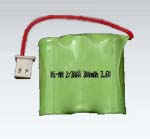
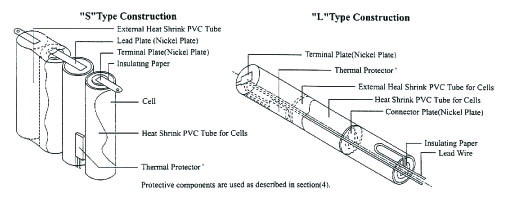
The pack record publishes its own designation system, which is how packs are specified: the code encodes the number of cells in the pack, the battery type (per the Ni-MH single-cell technical specification), the capacity (divided by ten in the code), a configuration code, a connector code and the wire detail. Connector codes cover M, J, X and U connector families plus W for wire leads and T for tabs — so a pack enquiry can be written as a code string the desk can build against.
| Pack code elements | Cell count · battery type · capacity/10 · configuration · connector · wire |
|---|---|
| Connector codes | M / J / X / U families; W = wire; T = tab |
| Cell formats | Single cells; button cells |
| Pack formats | Standard packs; button-cell packs in five recorded combination shapes (A/B/E/G/L) |
Where Ni-MH fits in this catalogue
Ni-MH also appears inside the lighting line — the solar garden lawn light runs a 600 mAh Ni-MH battery and the string lights a 1.2 V AA Ni-MH cell — which is the practical story of this family: it is the chemistry already at work inside products across this catalogue. For the OEM comparison between Ni-MH and lithium packs, see the blog: Ni-MH vs lithium battery packs.
How do I spec a pack?
Use the designation elements: cell count, cell type from the single-cell specification, capacity, configuration shape, connector code and wire detail. Send the string — or your device requirements — with your enquiry.
Are capacities published per cell?
Cell capacities sit in the single-cell technical specification referenced by the pack system; request the current cell table for your target capacity.
Ni-MH in solar products: why the chemistry persists
Open a solar garden light of the recorded kind and the battery inside is very likely Ni-MH — the lawn light in this catalogue runs a 600 mAh Ni-MH cell, and the string sets run Ni-MH again. The persistence is rational. Solar charging is uncontrolled charging — variable current, partial cycles, heat — and Ni-MH tolerates it with minimal management electronics. The cells are cheap at small capacities, safe in consumer hands, replaceable at end of life, and free of lithium's freight overhead, which matters when the battery rides inside a low-cost retail product. Lithium wins where runtime per gram is the product; Ni-MH wins where the battery is a component of a price-point product. Component buyers sourcing packs should read that same logic at programme scale.
Storage and shelf discipline
Ni-MH's faster self-discharge is manageable and worth managing explicitly in a programme. Cells and packs held as spares should be stored charged, topped up on a schedule, and rotated so the oldest stock ships first — a flat Ni-MH pack left for a year is the chemistry's commonest disappointment and its most preventable one. For equipment programmes, the same discipline applies at the product level: devices shipped with Ni-MH inside should carry a first-charge instruction, and distributors in slow-moving markets should agree the rotation rule with the programme at order time rather than discovering the shelf behaviour in returns.